

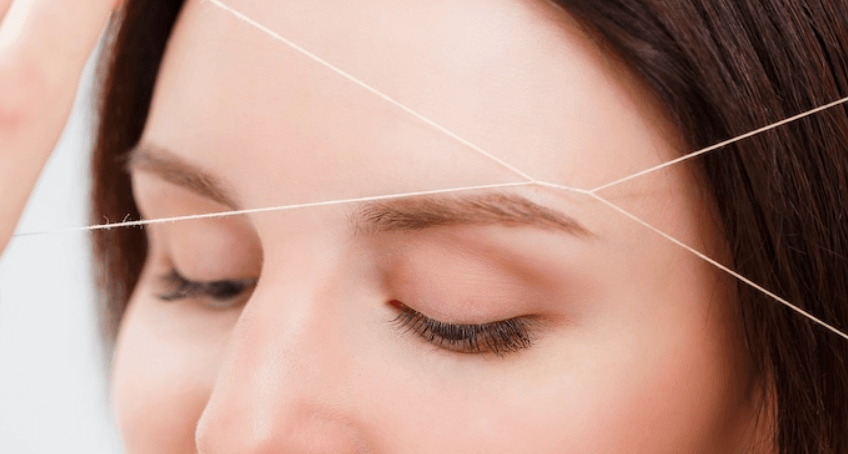
You know that feeling when you get your eyebrows threaded, look in the mirror, and love how clean and defined they look? But then you notice the skin around them is red, maybe a little bumpy, and slightly sore. Suddenly, those perfectly shaped brows aren’t the only thing on your mind.
Is this normal? Did threading hurt your skin? And if you get your eyebrows done every few weeks, should you be worried?
These are fair questions. After all, threading is part of many people’s regular beauty routines, and nobody wants a simple brow appointment to leave their skin feeling uncomfortable.
The reassuring news is that threading usually doesn’t cause lasting skin damage when done properly. However, your skin does need a little attention, especially if it tends to react easily.
Why Does Your Skin Get Red After Threading?
If your skin looks pink or red immediately after threading, there’s a simple reason. The thread pulls hairs out from the roots, and that repeated pulling can temporarily irritate the surrounding skin.
Some people barely notice anything afterward. Others walk out with redness that takes a few hours to settle. You might even notice tiny bumps around your brows, particularly if your skin is sensitive.
It doesn’t necessarily mean anything has gone wrong. Sometimes, your skin just needs a little time to calm down.
What you shouldn’t ignore is irritation that keeps getting worse. Significant swelling, increasing pain, or redness that spreads may indicate a problem that needs medical attention.
Can Threading Actually Damage Your Skin?
For most people, threading is a suitable way to remove unwanted eyebrow hair without causing lasting damage. Unlike waxing, it doesn’t involve spreading wax over the skin and pulling it away. It also avoids the chemicals found in some hair-removal creams.
Still, threading isn’t completely risk-free. If the thread repeatedly rubs against the same patch of skin or the technique is too rough, irritation can follow. Threading over already damaged or inflamed skin may make things worse, too.
Your skincare routine can play a part here. Have you recently used retinol, exfoliating acids, or other strong skincare products? Has your skin been peeling after a facial or spending too much time in the sun? These are all reasons to be more careful before booking your next appointment.
If you’re unsure whether your skin is ready for threading, ask your dermatologist for advice.
What Can You Do to Keep Your Skin Comfortable?
You don’t need to turn post-threading care into a complicated routine. A few simple habits can help.
- Stop touching your brows. It’s tempting to feel the freshly shaped area, but rubbing or picking at tiny bumps can make irritation worse.
- Try a cool compress. If your skin feels warm, gently hold a clean, cool cloth against it. Avoid putting ice directly on your face.
- Take a break from strong skincare products. Skip exfoliating acids, scrubs, and anything that stings until your skin feels normal again.
- Don’t rush to apply makeup. If the area is still red or tender, give it some time before covering it with makeup.
- Keep things gentle. Avoid excessive heat, such as saunas or very hot showers, while your skin is irritated.
If you develop severe pain, blistering, spreading redness, or swelling that persists, seek medical advice instead of trying to manage it yourself.
How Can You Make Your Next Appointment Better?
A comfortable threading experience starts with someone who works carefully and follows good hygiene practices. Let your threading professional know if your skin is sensitive or if you’ve recently used products that make it more delicate.
And remember, your brows don’t have to be overworked to look good. Repeatedly going over the same area to catch every tiny hair can cause unnecessary irritation. A careful approach that follows your natural brow shape is often the better choice.
Should You Stop Getting Your Eyebrows Threaded?
Not necessarily. If your skin settles quickly and you’re happy with your results, a little temporary redness usually isn’t a reason to stop.
Pay attention to how your own skin reacts. If irritation happens after every appointment or lasts longer than expected, speak with a dermatologist and explore whether another hair-removal method might suit you better.
At the end of the day, getting your eyebrows shaped should be a simple part of looking after yourself.
Beautiful brows are lovely, but feeling comfortable in your own skin matters just as much.